Where?
Deciding where your CDR projects should be located helps narrow down suppliers and ensures that your purchases align with your organization's values, communication needs, and risk preferences.
Companies may prefer specific locations for several reasons:
Brand positioning and storytelling
Some organizations choose projects located in countries where they operate, have customers, or have stakeholders who value local impact.
Example: A European company may prefer European CDR projects to strengthen local climate leadership messaging.
Country and operational risk
Buyers often consider the political stability, governance quality, and long-term reliability of the project's host country. These factors influence confidence in land tenure, monitoring, long-term storage, and verification.
Regulatory alignment and future compliance
In some jurisdictions, buyers may need to consider whether projects are eligible under current or emerging regulatory frameworks. In Europe, for example, companies may increasingly prefer CDR projects that are likely to qualify under EU certification and accounting rules, such as CRCF eligibility. This can influence location choices beyond branding or country risk, as regulatory recognition affects how removals can be claimed, reported, or used toward future compliance or policy-linked objectives.
Co-benefits and social impact
Nature-based projects may deliver several benefits, which vary by geography, such as community benefits, biodiversity support, or land restoration. Some organizations may prioritize regions where co-benefits align with their sustainability strategy.
Case Study: Google has signed a deal to purchase 100,000 tonnes of carbon removal credits from Varaha's biochar projects in India by 2030. Varaha sources agricultural waste from smallholder farmers, converts this material into biochar, and applies it to agricultural soils, resulting in long-lived carbon storage.
There is no single "right" location. What matters is that the choice fits your climate strategy, communications objectives, and risk tolerance.
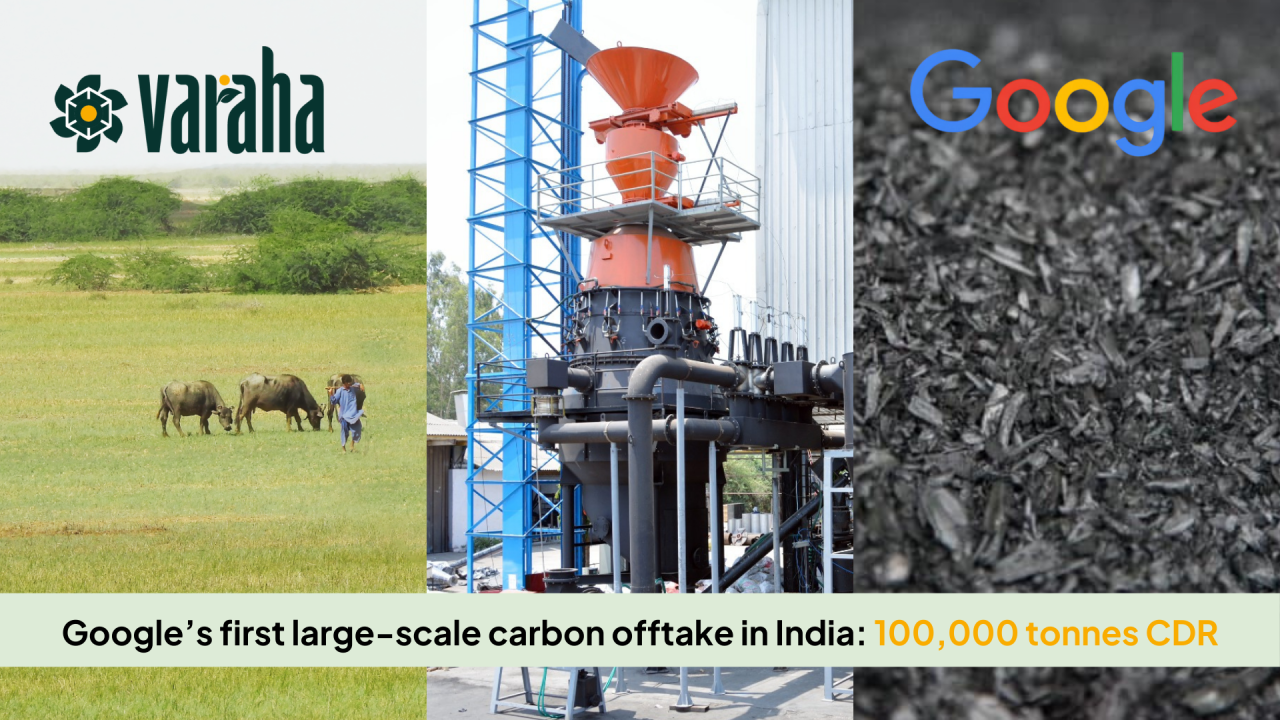
[Image source: Varaha]